
🔜 Upcoming Event 📌
22 October 2026 | 16:00 – 17:00 | Lecture hall H
MTT Colloquium - PhD presentations
Sterre Bult and Smit Dhanani
22-10-2026 - Lecture Hall H
PhD Presentation
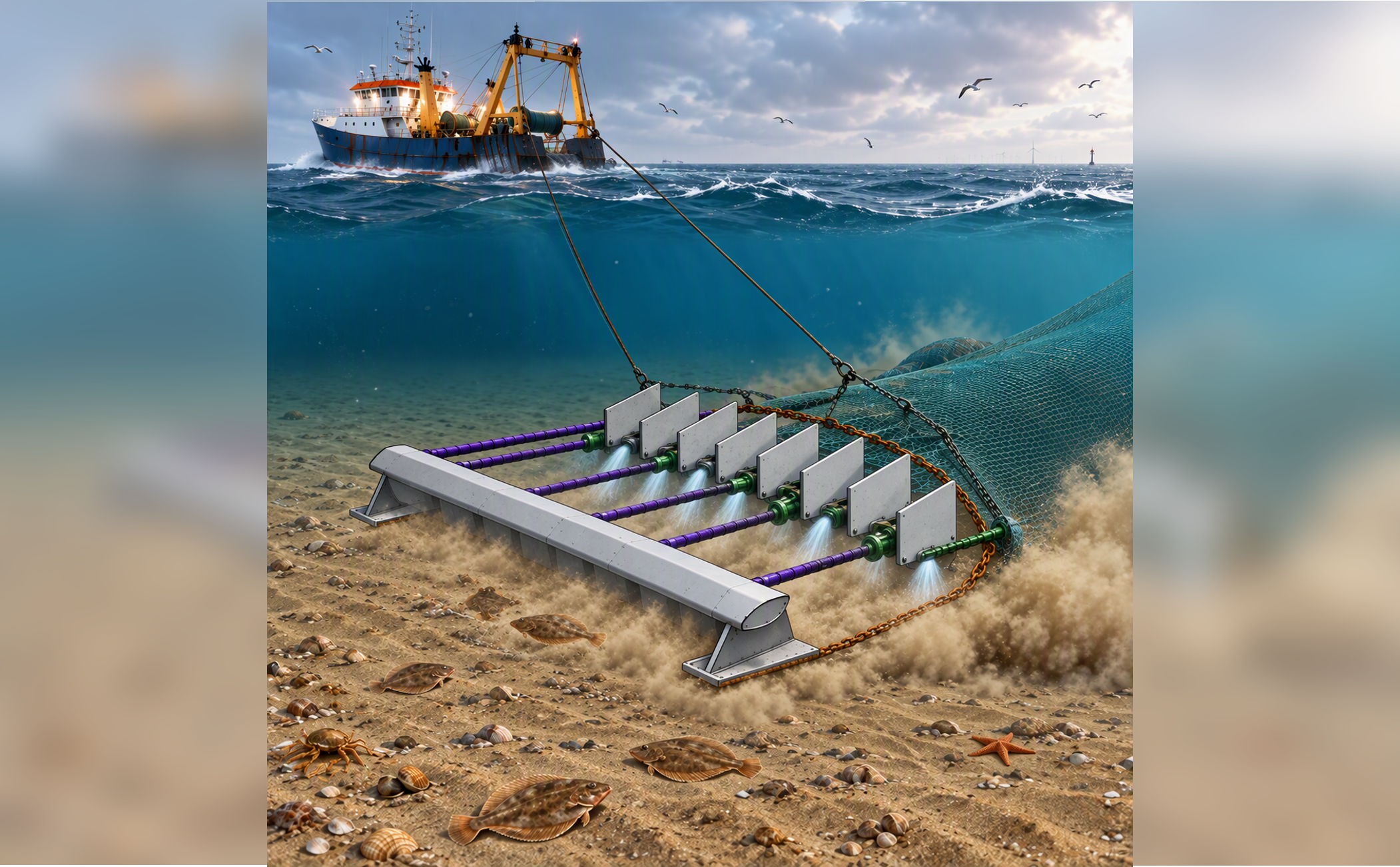
Development of optimized water jet gear for selective flatfish trawling
Sterre Bult
Commercial demersal trawl fisheries commonly use tickler chains to stimulate flatfish from the seabed. However, these chains are a major source of physical disturbance to benthic habitats and can result in unwanted bycatch. To address these issues, a novel fishing concept is being developed that combines electrical detection of flatfish with targeted water jet stimulation. The objective is to reduce seabed disturbance while improving species selectivity. Experimental and numerical research has been conducted to identify and quantify the governing jet and sediment parameters controlling erosion and jet penetration in sandy seabeds. Together with ongoing research into flatfish behavior at Wageningen University, these findings provide the foundation for the design of selective water jet fishing gear. The resulting design opportunities, as well as the challenges, limitations, and remaining knowledge gaps associated with the concept, are explored.
22-10-2026 - Lecture Hall H
PhD Presentation

Exploring Design Possibilities for Wind Assisted Vessels
Smit Dhanani
Wind-assisted vessels have gained popularity in recent years as a result of industry-wide push towards maritime decarbonization. Designing such vessels can differ significantly from conventional design practices and requires careful attention to both hydrodynamic and aerodynamic aspects. As a result, the design space of such vessels can be overwhelmingly large and often unfeasible to thoroughly explore using existing methods. In this talk, we discuss an approach that structures the design problem into a hierarchy of local systems and subsystems to make exploration more manageable. The use of surrogate models and their modeling approach in this regard will be highlighted, along with a brief overview of the design and performance aspects of wind-assisted vessels.
The M&TT Colloquia is a colloquium series that is organized within the department of Maritime and Transport Technology at Delft University of Technology. The organization is done by PhD students from this department.